
You see it on every restaurant table and in every grocery store. But when someone asks you to explain exactly what mineral water is — how it differs from regular water, where it comes from, what it does for your health, and how to use it — could you give a clear answer?
Most people cannot. And that gap in knowledge is why so many Pakistani families are either paying for mineral water without understanding its value, or dismissing it as an unnecessary expense without realising what they are missing.
This is the complete guide to mineral water — from its scientific definition to its health applications, cooking uses, and how to choose the right one for your family.
The Definition — What Mineral Water Actually Is
Mineral water is water that contains a consistent, defined concentration of dissolved minerals and trace elements. These minerals — primarily calcium, magnesium, potassium, sodium, and bicarbonates — are either naturally present from a geological source or carefully added back after advanced filtration.
The Spruce Eats defines mineral water as water that “contains minerals or other dissolved substances that alter its taste or give it therapeutic value. Minerals may include calcium, magnesium, potassium, sodium, bicarbonate, iron, and zinc.”
What separates mineral water from all other water types is this consistency. The mineral profile is the same in every bottle — published, tested, and guaranteed. This is fundamentally different from tap water (variable and unpredictable), spring water (changes with seasons and rainfall), and filtered water (minerals removed by the filtration process).
Source: The Spruce Eats — What Is Mineral Water and How to Use It: thespruceeats.com/what-is-mineral-water-4772011
How Mineral Water Is Made — Two Methods
Method 1 — Natural Mineral Water
Natural mineral water originates from underground aquifers — layers of porous rock that accumulate rainwater over decades and centuries. As water percolates through rock, it dissolves the minerals present in the geological formation — calcium from limestone, magnesium from dolomite, sodium from salt deposits, and so on.
When accessed through a spring or drilled borehole, this water carries a natural mineral profile that reflects its geological source. The Codex Alimentarius (the international food standards authority) defines natural mineral water as requiring stable composition from its source — it must be consistently the same across seasons and years to be classified as natural mineral water.
Natural mineral water is bottled directly at source, minimally processed, and distributed. European brands like Evian and Perrier are examples of internationally recognised natural mineral water.
Method 2 — Processed Mineral Water (Most Common in Pakistan)
Processed mineral water — the most common commercial format in Pakistan — takes a different approach. Source water (which may be from a municipal supply, a borehole, or a natural source) is put through industrial-grade multi-stage filtration that removes all impurities — bacteria, heavy metals, chemicals, and dissolved minerals — producing a clean, pure water base.
Carefully balanced minerals are then added back in precise, measured quantities to create a consistent, defined mineral profile. This approach has the advantage of producing water with an exactly specified and consistent mineral composition that is the same in every batch — unlike natural mineral water whose profile, while consistent for a given source, varies between different natural sources.
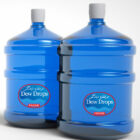
Dew Drops Fresh uses this approach — multi-stage industrial filtration followed by carefully balanced mineral addition — producing water with a fully published, consistent mineral profile in every 19-litre bottle delivered to Islamabad and Rawalpindi homes.
Types of Mineral Water
Still mineral water No carbonation. The most common format for daily drinking and cooking. Appropriate for all ages including infants (when mineral levels are within safe ranges). The best choice for Pakistani families for everyday use.
Sparkling natural mineral water Contains naturally occurring carbon dioxide from the mineral source — making it naturally fizzy. Perrier is the most internationally recognised example. Appropriate as an occasional beverage but the carbonic acid makes it mildly acidic — not ideal as the exclusive daily drinking water.
Artificially carbonated mineral water Carbon dioxide added to still mineral water during bottling. Produces the same fizzy texture. The mineral content is identical to the still version — only the carbonation differs.
Low-sodium mineral water Mineral water specifically formulated with sodium below 20 mg/l — appropriate for people managing hypertension, heart conditions, or kidney concerns, and for infants. Dew Drops Fresh, at 1.3 mg/l sodium, falls into this category.
High-mineral content water Water from very mineral-rich geological sources. May have TDS above 500 mg/l. Sometimes used therapeutically under medical guidance — not recommended for daily drinking without consulting a doctor.
The Minerals and What They Do
Understanding what each mineral in your water actually does gives the composition table on the label real meaning:
Calcium (Ca²⁺) The structural mineral of bones and teeth. Also essential for muscle contraction (including the heart), nerve signal transmission, and blood clotting. The human body cannot produce calcium — it must be consumed daily from food and water. Mineral water is a bioavailable source: research confirms calcium from water is absorbed as effectively as calcium from dairy.
Magnesium (Mg²⁺) Involved in over 300 enzymatic reactions — energy production, protein synthesis, DNA repair, blood sugar regulation. Magnesium deficiency is one of the most widespread nutritional deficiencies globally and is particularly prevalent in Pakistan. Mineral water provides a consistent, easily absorbed daily supplement.
Potassium (K⁺) Works in opposition to sodium to regulate fluid balance and blood pressure. In populations with high dietary sodium (like Pakistan), adequate potassium intake is a critical cardiovascular health factor. Regular potassium from mineral water contributes meaningfully to daily intake.
Bicarbonates (HCO₃⁻) The anion that gives mineral water its characteristic clean taste and mild alkalinity. Bicarbonates neutralise excess stomach acid and support healthy digestion. Particularly valuable after rich, heavy meals — which describes most Pakistani evening meals.
Sodium (Na⁺) Essential in small amounts for fluid balance and nerve function. In mineral water for daily drinking, low sodium (below 20 mg/l) is the ideal — providing necessary electrolyte function without contributing to dietary sodium excess.
Silica (SiO₂) Present in trace amounts in some mineral waters. Associated with improved skin elasticity, collagen synthesis, and joint health. Emerging research interest — currently considered beneficial at trace levels found in natural mineral water.
How to Use Mineral Water — Beyond Just Drinking
This is where mineral water’s value extends beyond hydration into your kitchen and daily routine.
Daily drinking The primary use. 8 to 10 glasses per day for adults. All family members including children and elderly benefit from daily mineral water consumption.
Baby formula preparation Low-sodium, appropriately mineralised water for infant formula. Always boil first for babies under 12 months. Dew Drops Fresh is suitable for this use.
Making tea and coffee The mineral content of water significantly affects the flavour of tea and coffee. The Spruce Eats specifically notes that “mineral water can make a better cup of tea than plain water because minerals enhance extraction and flavour development.” Pakistani chai prepared with mineral water produces a noticeably cleaner, more developed flavour than the same tea made with heavily chlorinated tap water.
Cooking rice and pasta Rice and pasta absorb the water they are cooked in. Mineral water produces rice with cleaner flavour and better texture — the minerals (particularly bicarbonates) influence starch gelatinisation during cooking.
Bread and baking Mineral content directly affects yeast activity in bread making. Calcium and magnesium strengthen gluten structure. Bicarbonates affect the pH of the dough, which influences yeast activity and the final texture of the bread. Professional bakers in Europe have used specific mineral water formulations to optimise their bread for decades.
Watering plants Some indoor plants benefit from mineral water’s calcium and magnesium content. However, for large quantities needed for plants, this is rarely economically practical.
Source: The Spruce Eats — What Is Mineral Water: thespruceeats.com/what-is-mineral-water-4772011
FAQs
Q: Is mineral water the same as distilled water? A: No — they are essentially opposites. Distilled water has had all minerals and dissolved substances removed through evaporation and condensation. It is extremely pure but nutritionally empty, with TDS typically below 5 mg/l. Mineral water has a defined mineral composition that is its defining characteristic.
Q: Is mineral water the same as alkaline water? A: Not necessarily. Alkaline water refers to water with a pH above 7.0 — but this can be achieved through various means including electrolysis (ionised water) or bicarbonate mineral content. Quality mineral water with high bicarbonate content is naturally mildly alkaline. The bicarbonate alkalinity of mineral water is the most natural and health-appropriate form.
Q: Can mineral water be used for cooking at full substitution for tap water? A: Yes, completely. Mineral water can replace tap water in any cooking application. In many applications the results are superior due to mineral water’s flavour contribution and the absence of chlorine that can affect food flavour.
Q: Does mineral water need to be refrigerated? A: Unopened mineral water does not require refrigeration but should be stored away from direct sunlight and heat. Once opened or loaded onto a dispenser, consume within 2 to 3 weeks.
Q: Is there a difference between cheap and expensive mineral water? A: In terms of health value, no direct correlation. Compare mineral composition tables. Some expensive imported brands have lower mineral content than quality affordable Pakistani mineral water. Price reflects branding, packaging, and distribution costs — not health value.
References:
- The Spruce Eats — What Is Mineral Water and How to Use It: thespruceeats.com/what-is-mineral-water-4772011
- Codex Alimentarius — Standard for Natural Mineral Waters: fao.org/fao-who-codexalimentarius
- WHO — Nutrients in Drinking Water: who.int/water_sanitation_health/dwq/nutrientsindw.pdf
- American Journal of Clinical Nutrition — Calcium from Water vs Dairy: academic.oup.com/ajcn
- NIH — Magnesium Fact Sheet: ods.od.nih.gov/factsheets/Magnesium-HealthProfessional